
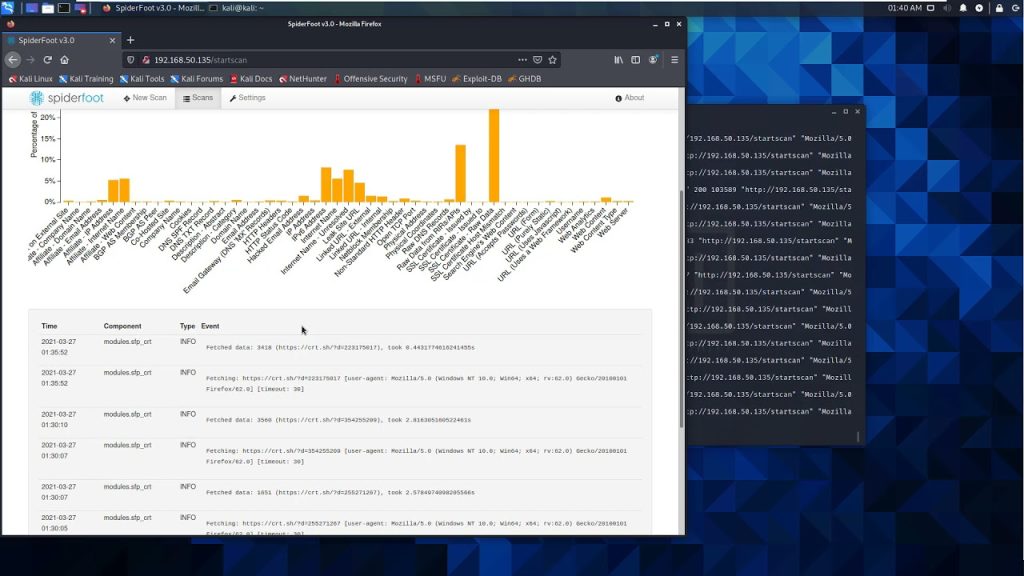
Quick answer: No, SpiderFoot does not require advanced technical skills. If you can copy and paste a few terminal commands and use a web browser, you can install it and run useful scans. What takes more skill is interpreting the results: knowing what a DNS record, an open port or a breach entry means, and which findings matter. Those skills come quickly with practice, and SpiderFoot’s correlation engine helps by flagging the important items for you.
Many people avoid OSINT tools because they look “too technical”. SpiderFoot is one of the friendliest ones. This guide breaks down exactly which skills you need at each level, how long it takes to learn, and a simple 30-day plan to go from beginner to confident user.
Skills Needed at Each Level
| Level | What you can do | Skills needed |
|---|---|---|
| Beginner | Install SpiderFoot, run Passive scans, read the Summary and Correlations | Basic computer use, copy-paste terminal commands, a browser |
| Intermediate | Choose modules, add API keys, run Footprint/Investigate scans, export and report | Basic networking (DNS, IP, ports), understanding of common data types |
| Advanced | CLI automation, scheduled scans, custom correlation rules, custom modules | Shell scripting, YAML, some Python, security knowledge |
You can get real value at the beginner level. Everything else is optional growth.
What You Do NOT Need
- Programming skills to run scans (Python is only needed if you write your own modules).
- Hacking experience. SpiderFoot collects public information; no exploits are involved.
- Expensive hardware. A normal laptop, or even an Android phone, is enough.
- Paid tools. SpiderFoot is free, and many API keys have free tiers.
The Few Technical Steps (and How Hard They Are)
Installation: easy to moderate
On Kali Linux it is one command (sudo apt install spiderfoot). On Windows, macOS and other Linux systems it is about six commands. Docker makes it simpler still. Follow our step-by-step SpiderFoot install guide; if something breaks, the SpiderFoot errors guide has copy-paste fixes.
Running a scan: easy
Click New Scan, type a target, choose a use case, click Run. That is it. Our SpiderFoot beginner tutorial walks you through every click.
Adding API keys: easy
Sign up for a free account with a provider, copy the key, paste it into Settings. Five minutes each.
Understanding results: moderate
This is where learning happens. You will see terms like INTERNET_NAME, AFFILIATE_IPADDR, MALICIOUS_IPADDR or EMAILADDR_COMPROMISED. Most are self-explanatory once you know basic networking.
Basic Concepts Worth Learning First
| Concept | Why it matters in SpiderFoot | Time to learn |
|---|---|---|
| Domains and subdomains | The most common scan target and result | 30 minutes |
| DNS records (A, MX, TXT, NS) | Show where services live and how email is set up | 1–2 hours |
| IP addresses and ASNs | Tell you who hosts a system and where | 1 hour |
| Ports and services | Reveal exposed systems like RDP or databases | 1–2 hours |
| Data breaches and credential leaks | Explain why a leaked email is a risk | 30 minutes |
| OSINT ethics and law | Keeps your work legal and responsible | 1 hour |
A 30-Day Plan to Learn SpiderFoot
Week 1: Install and explore
- Install SpiderFoot (Kali, Windows/Mac/Linux/Docker or Android).
- Run a Passive scan on your own email and domain.
- Explore every tab: Summary, Browse, Correlations, Graph, Log.
Week 2: Learn the data
- Study DNS, IPs and ports basics.
- Add 3–5 free API keys and rerun your scans. Compare the difference.
- Read about SpiderFoot modules and data sources.
Week 3: Real investigations
- Try each target type from our SpiderFoot target types guide.
- Investigate a known-malicious indicator from a public threat feed with the Investigate use case.
- Write a one-page report of your findings.
Week 4: Automate
- Learn the key CLI flags from our SpiderFoot commands cheat sheet.
- Export CSV/JSON and schedule a weekly scan.
- Compare the web interface and command line to settle on your workflow.
How SpiderFoot Makes Things Easier
- Use-case presets choose modules for you.
- Automatic target detection figures out whether you typed a domain, IP, email or name.
- Correlation rules highlight the risky findings, so you do not have to read every row.
- Graph view makes relationships easy to see.
- Clear module descriptions in Settings explain what each source does.
Common Beginner Challenges (and Fixes)
| Challenge | Fix |
|---|---|
| Install errors | Use Docker or the Kali package; see our errors guide |
| Too many results | Start in Correlations; use Passive; filter by data type |
| Modules return nothing | Add API keys; check the Log tab |
| Unsure what a finding means | Look up the data type; verify manually; ask in OSINT communities |
| Scans take too long | Avoid “All”; select fewer modules |
Who Needs More Advanced Skills?
If you plan to use SpiderFoot professionally, for example in penetration testing, threat intelligence or a SOC, you will want deeper networking and security knowledge so you can validate findings and advise on fixes. Our penetration testing methodology guide shows where OSINT fits in a professional engagement.
Frequently Asked Questions
Do I need to know programming to use SpiderFoot?
No. You can install SpiderFoot with copy-paste commands and run all scans from the web interface. Python is only needed if you want to write custom modules.
How long does it take to learn SpiderFoot?
Most people run useful scans on day one. Becoming comfortable with results and automation usually takes two to four weeks of regular practice.
Is SpiderFoot harder than Maltego?
For basic use, SpiderFoot is usually easier because scans run automatically from presets. Maltego offers more manual, interactive graph work, which takes longer to master.
What is the hardest part of using SpiderFoot?
Interpreting results. Knowing which findings are real risks and which are normal takes basic networking and security knowledge. The correlation engine helps highlight the most important findings.
Can non-technical people use SpiderFoot?
Yes, with some patience. Journalists, researchers and small-business owners use it for footprint audits, especially with the web interface and the Passive use case.
What skills do I need to automate SpiderFoot?
Basic shell scripting, familiarity with the sf.py flags and a scheduler like cron or Windows Task Scheduler.
Conclusion
SpiderFoot is built to be approachable. Installing it and running scans needs only basic computer skills; interpreting results needs a little networking knowledge that you can learn in a few weeks. Start with Passive scans on your own data, use Correlations as your guide, and grow into automation when you are ready. For a direct answer on beginners, read is SpiderFoot suitable for beginners.
Pingback: SpiderFoot Tutorial for Beginners: Step-by-Step Guide (2026)